

The greatest Fantastic Four stories of all time - swaderfrough
Best Fantastic Cardinal stories of all time
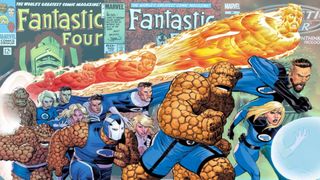
The Fantastic Quaternion officially turned 60 years gray-headed on August 8, and the anniversary Simon Marks not lonesome the origin of the team simply the origin of the entire Marvel Universe as well.
Despite being a little late, Marvel Comics celebrated the anniversary on Wednesday, September 15 with Fantastic Quaternion #35, an oversized take that features art from John Romita Jr. (World Health Organization recently reunited with Marvel), along with fan-preferred FF writer Mark Waid, and a new story centering on new MCU pregnant bad Kang and his variants.
The story dives into the past of the team, one of the to the highest degree storied in mirthful book chronicle, and adds a complete other twist to Reed Richards' past. When your opening 102 issues and six annuals have 'Stan Spike Lee & Jack Kirby' in the credits box, you're bound to bear a lot of classics.
Thus what improve time to have a look at best Fantastic Four stories ever, which means we're also looking at some of the best comic script stories of altogether time.
New Fantastic Four (Fantastic Four Vol. 1 #347-350)
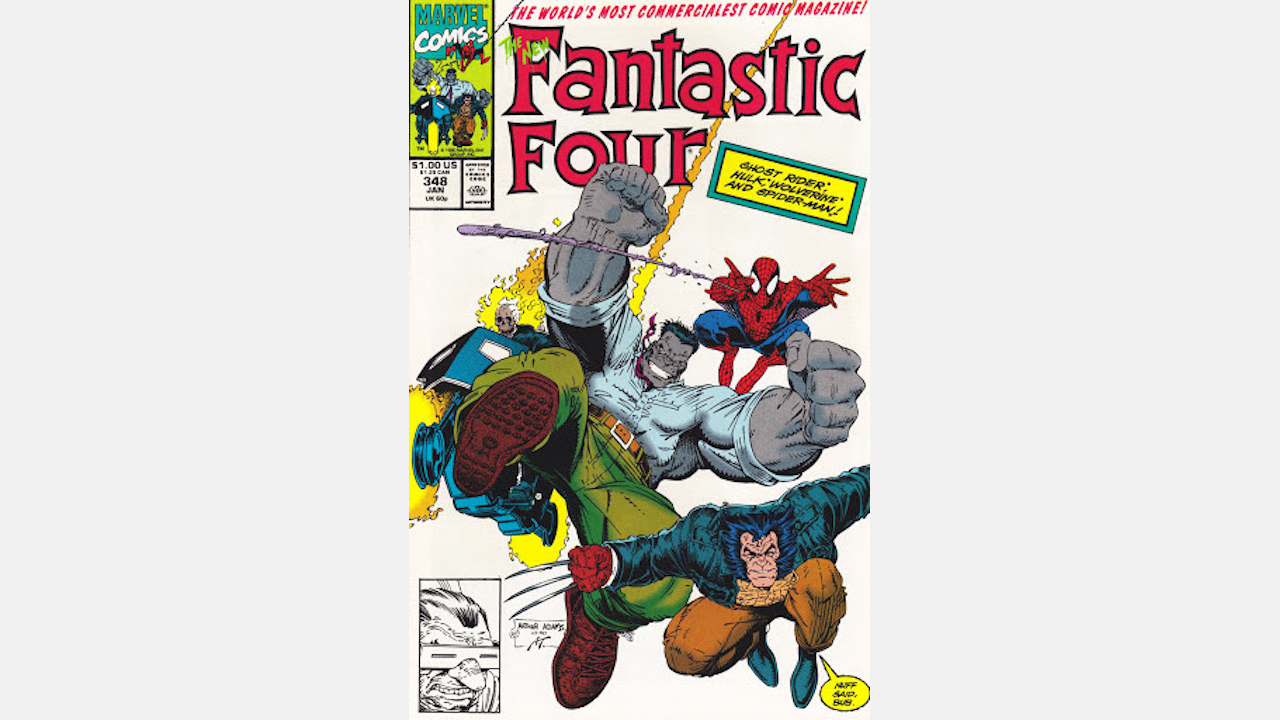
It may look strange to take up a story on this list that doesn't true feature the characters we usually esteem as the Fantastic Cardinal, but Walt Simonson's energetic history of an unlikely substitution team is overmuch fun not to include happening this list.
Simonson's Fantastic Four isn't as striking in the author/artist's catalog as his Thor course, just this stone with creative person Arthur Adams takes the FF to a somewhat meta-level away having the squad be replaced past some of Marvel's hottest characters at the clock time – Hulk, Wolverine, Ghost Rider, and Spider-Man – all while drolly pointing out the selling potential of the team-up in ingenious treat blurbs. And of course, the whole thing culminates in the return of the original FF (and a massive team up-up between some teams) in #350.
The tale (and its replacement squad) possess been fan-favorites ever since, though the thaumaturgy of Simonson and Adams's collective gumption of both action and humor has rarely been repeated – especially in the pages of Crack Quartet.
Buy: Amazon River
1234 (1234 #1-4)
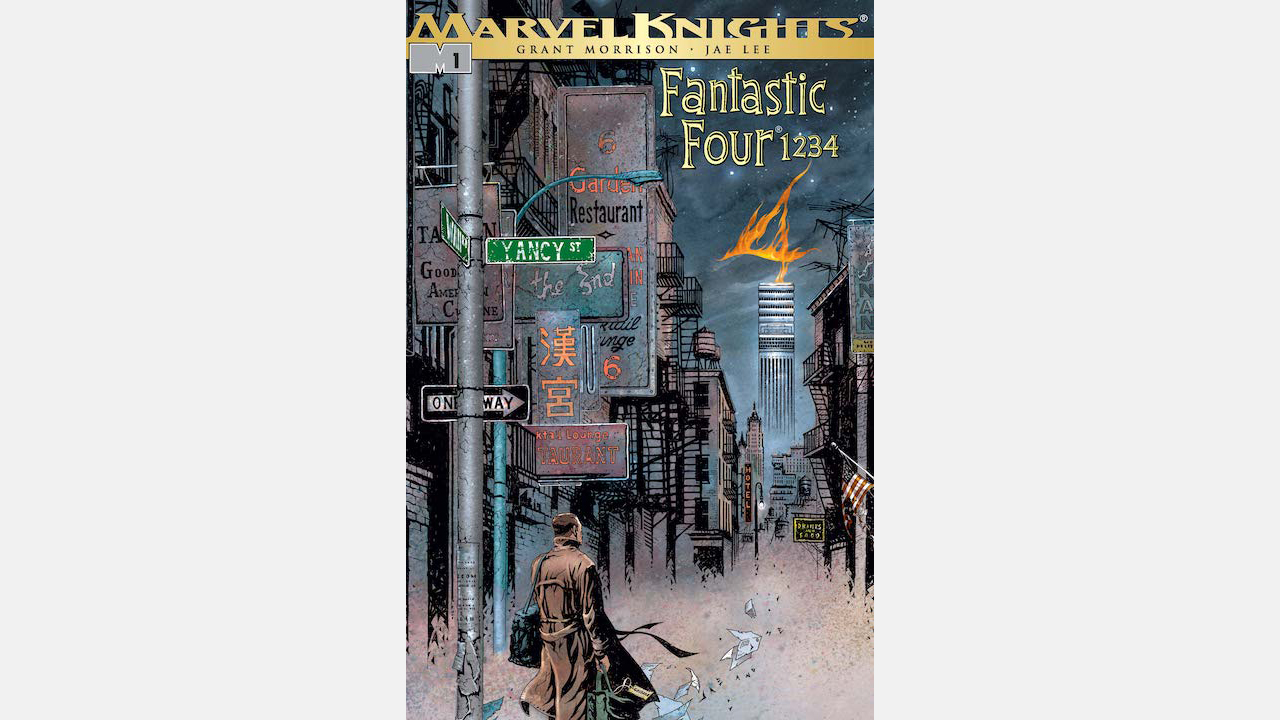
Grant Morrison is illustrious for their massive, reality-stretching ideas, so taking on the Fantastic Four is a bit of a zero-brainer, and their limited series 1234 with artist Jae Lee does not let down when it comes to high-concept. But what 1234 also manages to do is gain its whopping super skill conclusion through a roadmap of personal stories and narratives.
Splitting the Richards family unit through a serial of personal misfortunes and pitting them against a who's who of approximately of their greatest foes, Chloe Anthony Wofford and Lee dial in on Doctor Doomsday as the team's greatest adversary. As the various events that spread through the diagram are revealed to be Doom's machinations, 1234 becomes a tale about ii of the smartest workforce in the Marvel Macrocos - Reed Richards and Master Von Doom – incompatible in a realism-bending test of intelligence and will.
Corrupt: Amazon
The Peril and the Might (Fantastic Quaternion Vol. 1 #57-60)
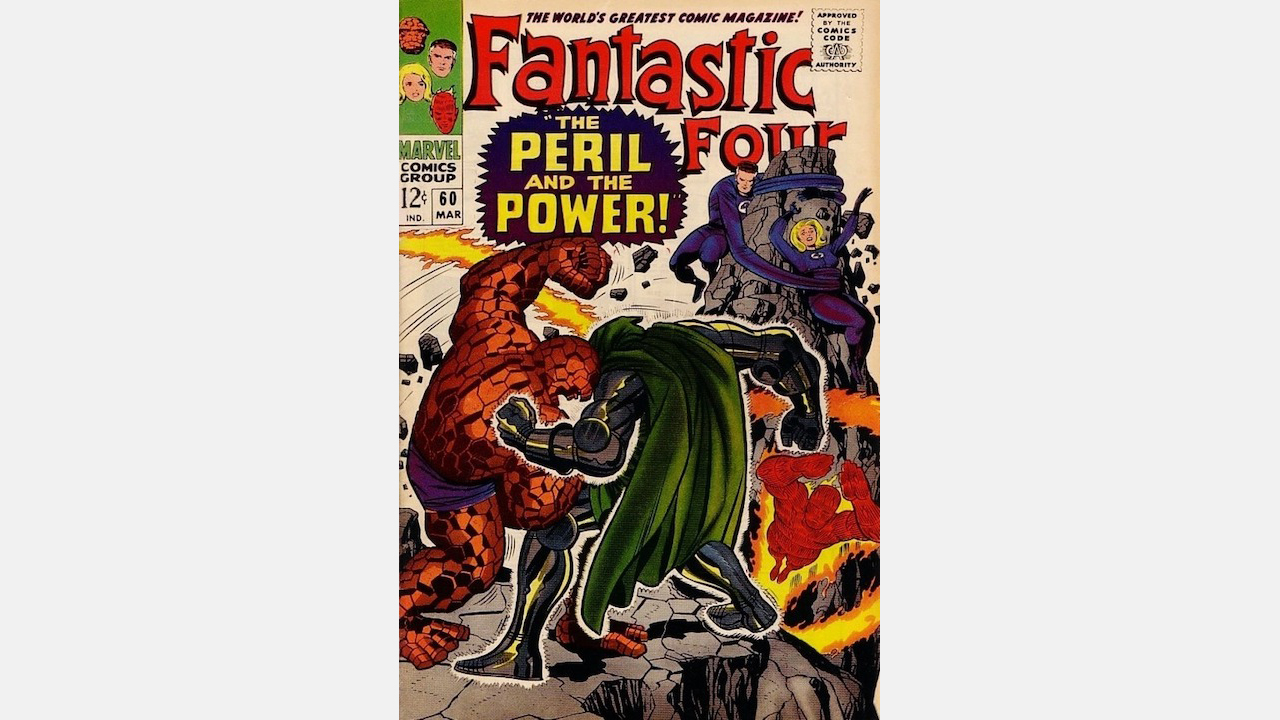
Many of the Stan Lee/Jack Kirby stories on this lean (and stories in general) center on the philosophical, the wondrous, the, well… fantastic.
Just there's also something to be aforesaid for a high-octane thriller in the work force of Marvel's first architects, too. And that's what Lee and Kirby deliver in 'The Peril and the Power,' a four-section story in which Doom uses a machine to slip the Power Cosmic from the Silver Surfboarder.
What follows is a globetrotting jeopardize that brings in the Inhumans, the Tremendous Quartet, and numerous other FF characters as Doom flits about wreaking havoc at the height of his power. Melodramatic action, bombastic sci-fi concepts, and much Kirby crackle than you can maintain with clutched armored clenched fist make this one of Lee and Kirby's most ripping adventures.
Bribe: Amazon
Fantastic Imitation (FF Vol. 2 #1-16)
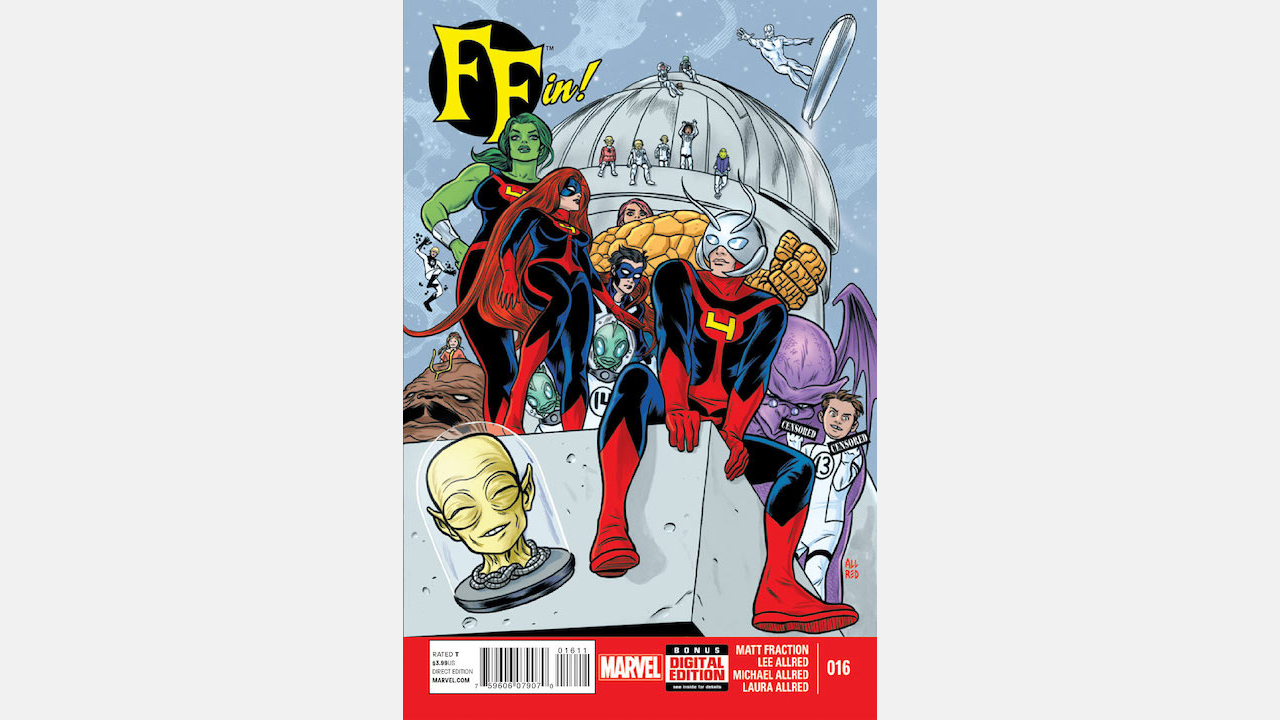
Following Jonathan Hickman's years-pole-handled Phenomenal Four run, writer Matt Fraction took o'er both the core championship and its sister form of address, FF. Divide sent the FF into space (and through time) and brought a substitute team into the Baxter Building in the pages of FF alongside creative person Mike Allred.
Ant-Man, Medusa, She-Hulk, and the newly introduced Disseminated sclerosis. Affair (Johnny's pop-star girlfriend Darla Deering wearing a mechanical Thing suit) formed the new team, World Health Organization were left hand in boot of the Future Foundation's radical of late science students. The entire volume lasted 16 issues (the last smattering of which were scripted past Lee Allred, Mike's brother) and get to the core of the Fantastic Quaternion's category dynamic by examining the family we take as well as the one we'rhenium born into.
FF too managed to keep the sci-fi weirdness dialed way up with a Voltron-style Doctor Destine/Annihilus/Kang mash-up baddie named Kang the Annihilating Vanquisher, a eyed future Johnny Storm, and of course the adorable oddity of the Foundation's many students. And, in its heartfelt finale, information technology brought Scott Lang face to face with Physician Doom, the human beings causative his girl Cassie's death.
Buy: Amazon
This Man, This Demon! (Fantastic Four Vol. 1 #51)
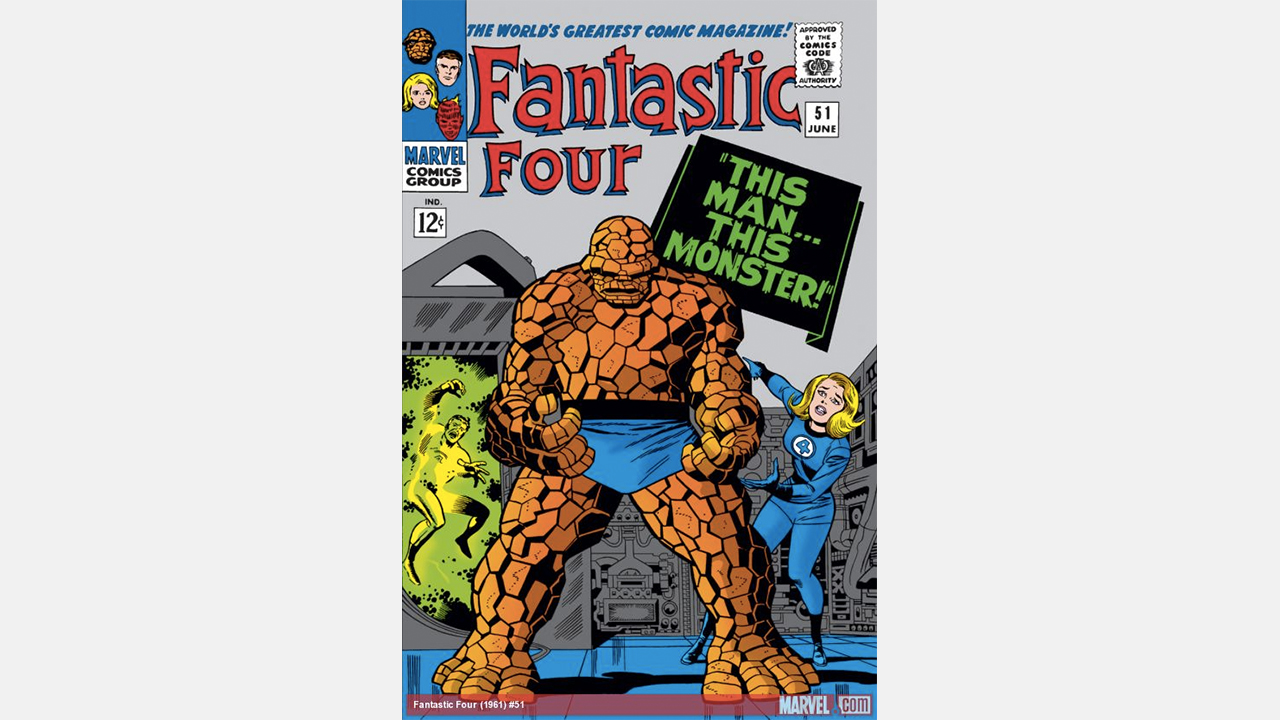
Stan Downwind and Jack Kirby are oft credited with bringing superheroes into recent storytelling with the Fantastic Quaternary by centerin on the team's humanity and personal relationships - an forward-looking concept in the early '60s, especially as an insight into characters whose powers can be as much a burden as a approval.
This dynamic is best explored in the story 'This Man, This Monster!' in which a criminal man of science does the unimaginable and steals Ben Grimm's powers, impersonating him among the FF and endangering Walter Reed Richards in the process.
The single-issue report culminates in a daring ritual killing that has tragic, unforeseen ramifications on Ben Grimm and his quest to rediscover his manhood. It's a beautifully crafted O. Henry-style story twist that shows off the foremost of what Lee and Kirby could accomplish together.
Buy: Amazon
Unthinkable (Fantastic Four vol. 2 #67-70, vol. 2 #500)
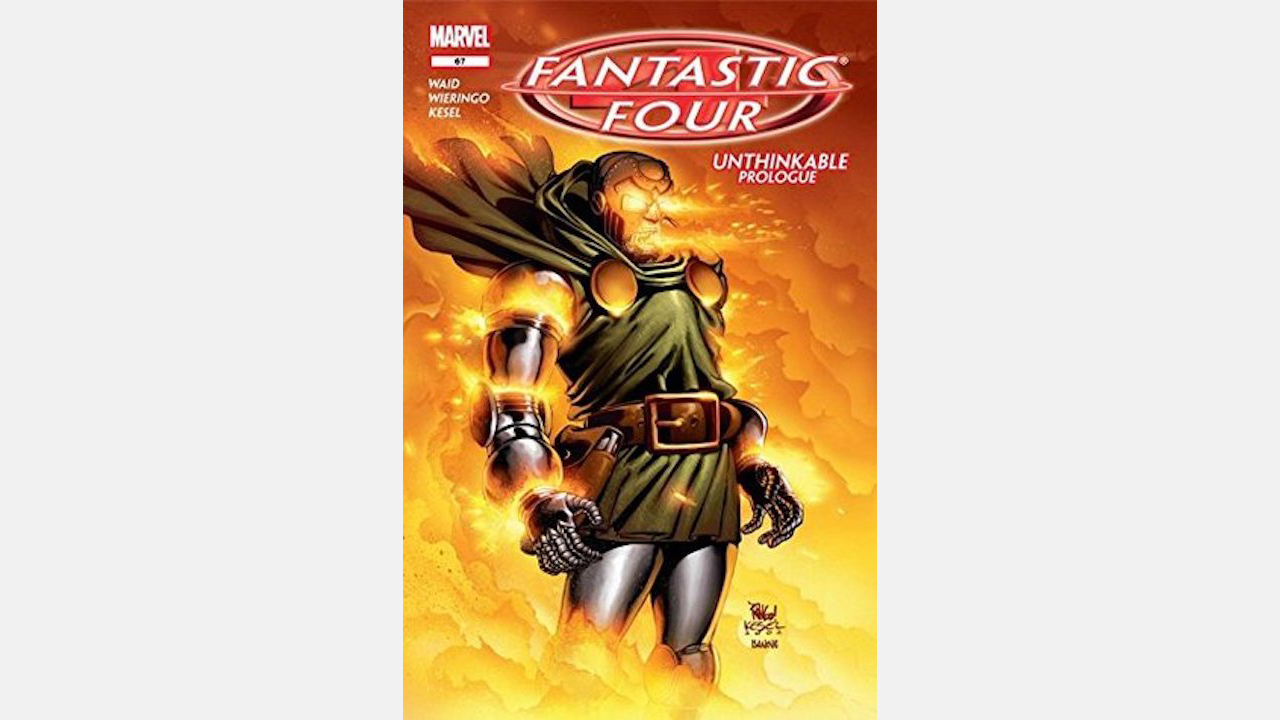
Denounce Waid and Mike Wieringo's Fancy Iv is largely hailed as one of the greatest runs on the title of every time – a report it earned in no small part thanks to 'Unimaginable,' a story that took the FF's arch-foe MD Doom to new levels of villainousness which included dark arcane power, a suit made of flesh – and eventually the death of combined of the FF's own.
Aft seizing awful arcane power through with a dark ritual in which he turned the flesh of his former lover into new soothsaying armor. Kidnapping Franklin and Valeria, Destine set about besting Beating-reed instrument Richards conclusively through with magic – the one 'science' Reed can't grasp.
'Unthinkable' forced the Fantastic Quaternity – and Reed specifically – to stretch himself in every imaginable capacity, and Doom still complete up as if by magic disfiguring Reed's face and setting him on a course that would eventually leave to Ben Grimm's death.
Waid and Wieringo's entire run captured the boundary-pushing, venturous nature of the FF, but Waid's ultimate showdown between Doom's magic and Reed's science, the unreliable new precedent for the FF's villains, and the start of Doom's connection to Valeria Richards make this one of the best stories of their run (non to mention Wieringo's masterful, communicatory nontextual matter) – and, it directly set the represent for the best story of the duo's work together.
Buy: Amazon
Three (Fantastic Tetrad Vol. 1 #583-588)
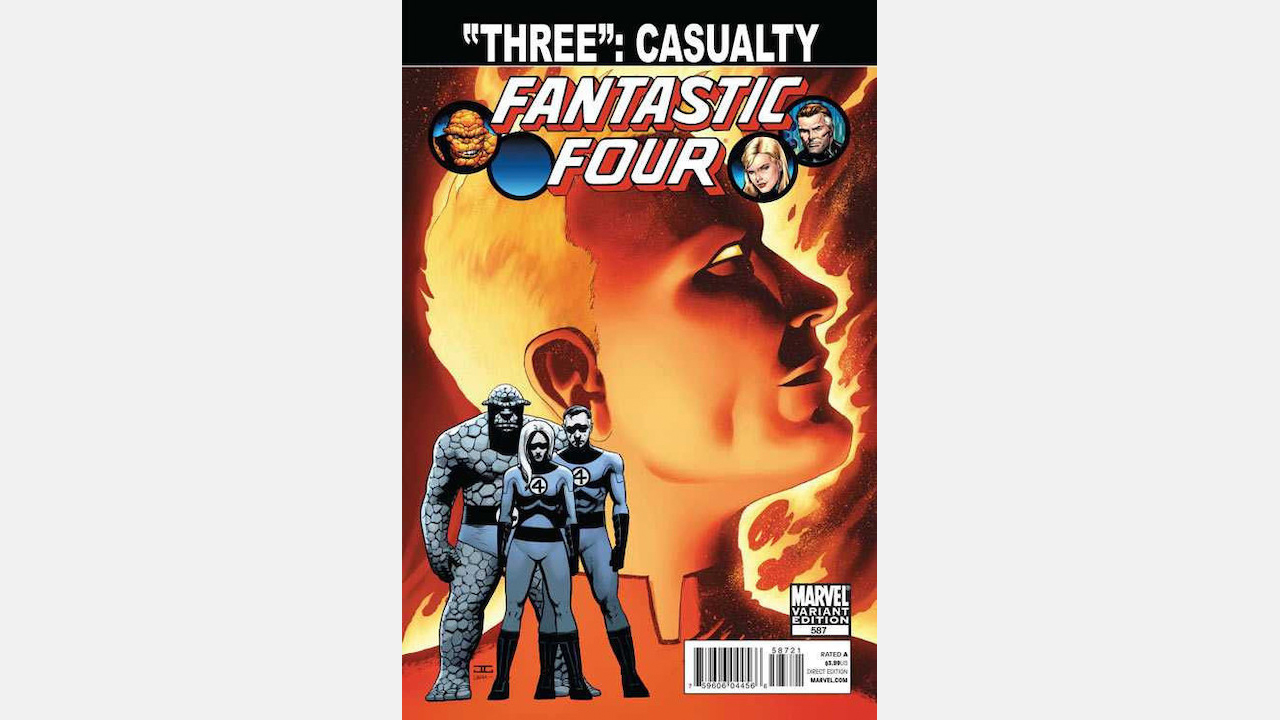
Writer Jonathan Hickman's Fantastic Four epic is a great read for fans looking for a big picture FF saga that touches along nearly the team's entirely mythos. But to dial his donation to the team down to a 1 narrative is a tougher prospect, partially because of the magnitude of his narrative design.
In that location are very much of gems in Hickman's FF, but the best story of his run is arguably 'Three' with artist Steve Epting. In the story's final chapter, Johnny and Ben Grimm fight alone to repel an invasion from the Negative Zona. Retributory as they'rhenium about to overcome the Annihilation Wave, a bit of Hickman's long-term tragedy kicks in, and Ben reverts to human form thanks to a potion atomic number 2 took that allows him to shed his jolting organize once a year.
Johnny is overrun by the Beckon as Ben seals the portal from the outside, lamenting his inability to help his friend thanks to the one thing he always wanted – the return of his humanity. Epting captures the unspeakable horror of the instant with intestine-wrenching moodiness that echoes Ben's solemn resignation at his best booster's destruction.
It's a dark chapter in the FF's chronicle without doubt (non that that's singular) but Hickman's ability to capture the rightful kin pathos of the Fancy Four and the unique bond between Johnny and Ben make this a must-learn story. The tale also formally brought Spider-Man into the team American Samoa Johnny's replacement and led to the creation of the Rising Foundation.
Buy: Amazon
Trial of Reed Richards (Rattling Four Vol. 1 #262)
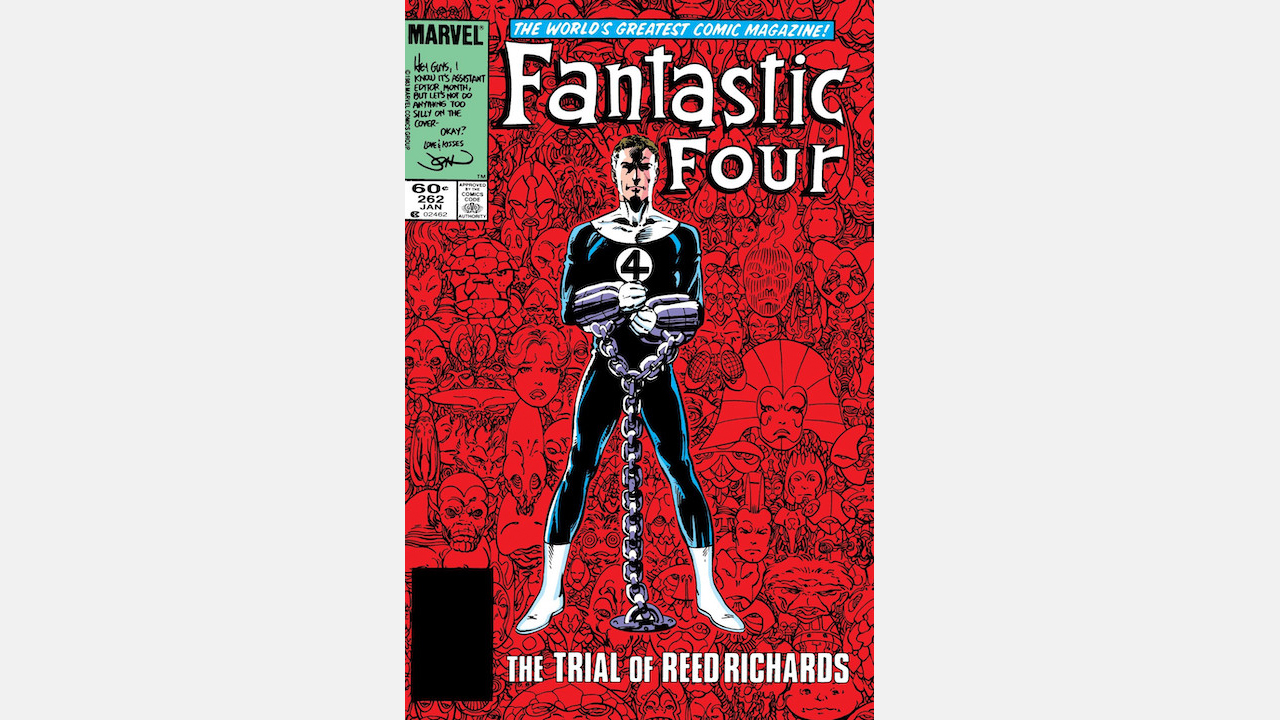
John Byrne's extended keep going Terrific Four in the '80s brought Marvel's number one family in reply to prominence after nearly a decade of workmanlike runs that aspired to but didn't reach the high of innovation and excitement the 100 issues Lee and Kirby produced in the '60s. But Byrne, with his cartoonist's approach to writing and drawing the series and his knack for sci-fi decorated melodrama made him the heir apparent to Lee and Kirby's grandeur – and made the FF a can't-girl title for the first time in old age.
It's tough to pin drink down everything Byrne contributed to the Fantastic Quadruplet, but his solid report 'The Trial of Galactus' sums aweigh what Byrne was capable of at the height of his game, and the power of escalating a big idea. In the story, Beating-reed instrument I. A. Richards stands trial for saving Galactus' life sentence and allowing him to waste more planets.
In the course of the taradiddle, we learn Galactus' story and his commit in the large order of the Marvel Universe. But the grandeur of 'The Trial of Galactus' is that by putt Reed along trial, it forces him to grapple with the ramifications of a universe without Galactus's large hunger – and even defend the way atomic number 2 sates it.
Buy: Amazon
Hereafter (Fantastic Four Vol. 1 #509-511)
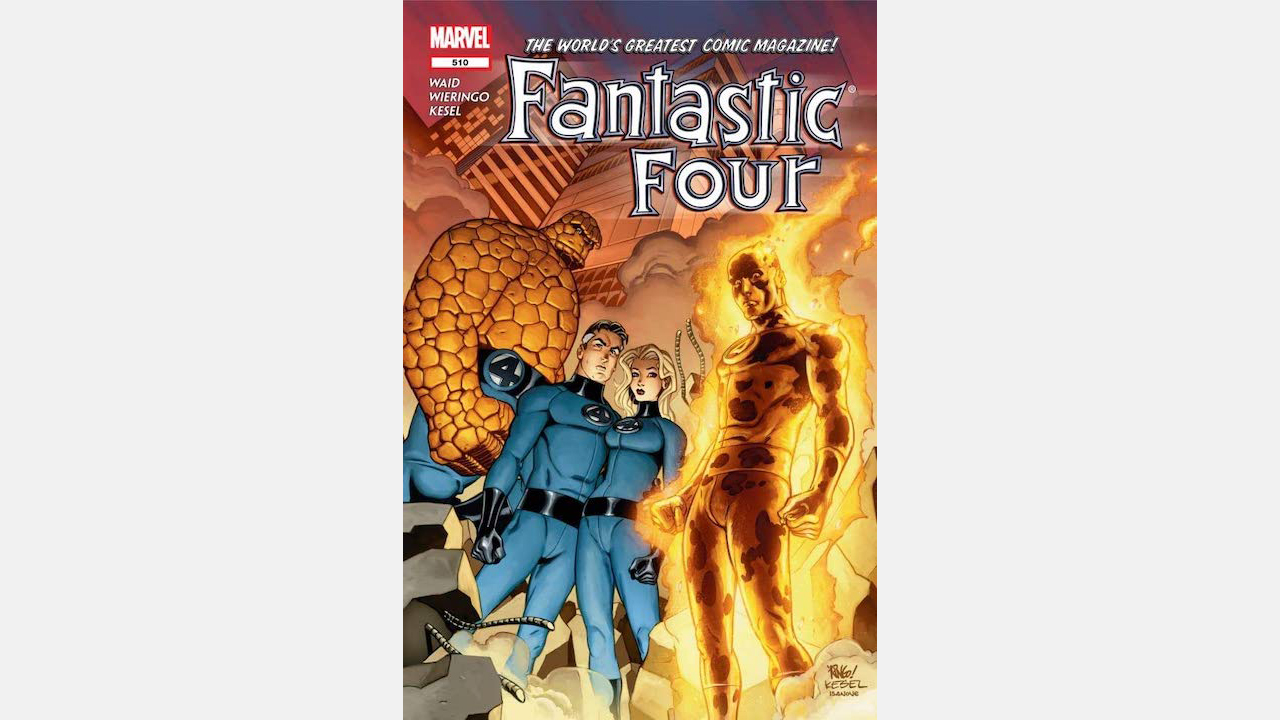
Fantastic Four has ever been about family. Sometimes that means your blood relations, but sometimes it's about the people you pick out. For Reed Richards, that means Ben Grimm, his constant fellow traveller, superior supporter, and fellow FF extremity. Sol when Doctor Doom used his mind-switching mogul to accept Ben's organic structure and force out Vibrating reed to kill his best friend to get the better of him in Mark Waid and Howard Porter's 'Authoritative Action,' it leftfield the distillery-physically scarred Reed inconsolable.
The postdate-up electric discharge to 'Authoritative Action' (itself presaged past the also must-read 'Unthinkable') 'Hereafter' brought the title's standard artist Mike Wieringo back to the fold for what would become the creative team up's best tale – and one of the greatest tributes to Wonder Comics, the FF, and even Jack Kirby ever put to paper.
'Future' follows Reed's quest to bring back his dead supporter. In doing so, Reed decides to put his faith in something differently himself, and it leads him to a destination unlike whatsoever the FF had ever visited previously – Heaven itself, complete with a Kirby-esque creator pulling the strings (or more aptly push the pencils). But unlike old fourth-wall-breaking stories suchlike Grant James Douglas Morrison's Animal Man, 'Hereafter' is to a lesser extent nigh the consequences of learning the nature of one's reality and more about what is possible when you accept the honourable impossibleness at the precise time.
This isn't a story where Reed, Sue, Johnny, and Ben save the world. It's not a level where they bash falling a supervillain or resolve a cosmic crisis. 'Hereafter' is or so honey, hope, friendship, and ultimately, discovery – the gist tenets of what Fantastic Four is every some.
Buy: Amazon
The Galactus Trilogy (Fantastic Four Vol. 1 #48-50)
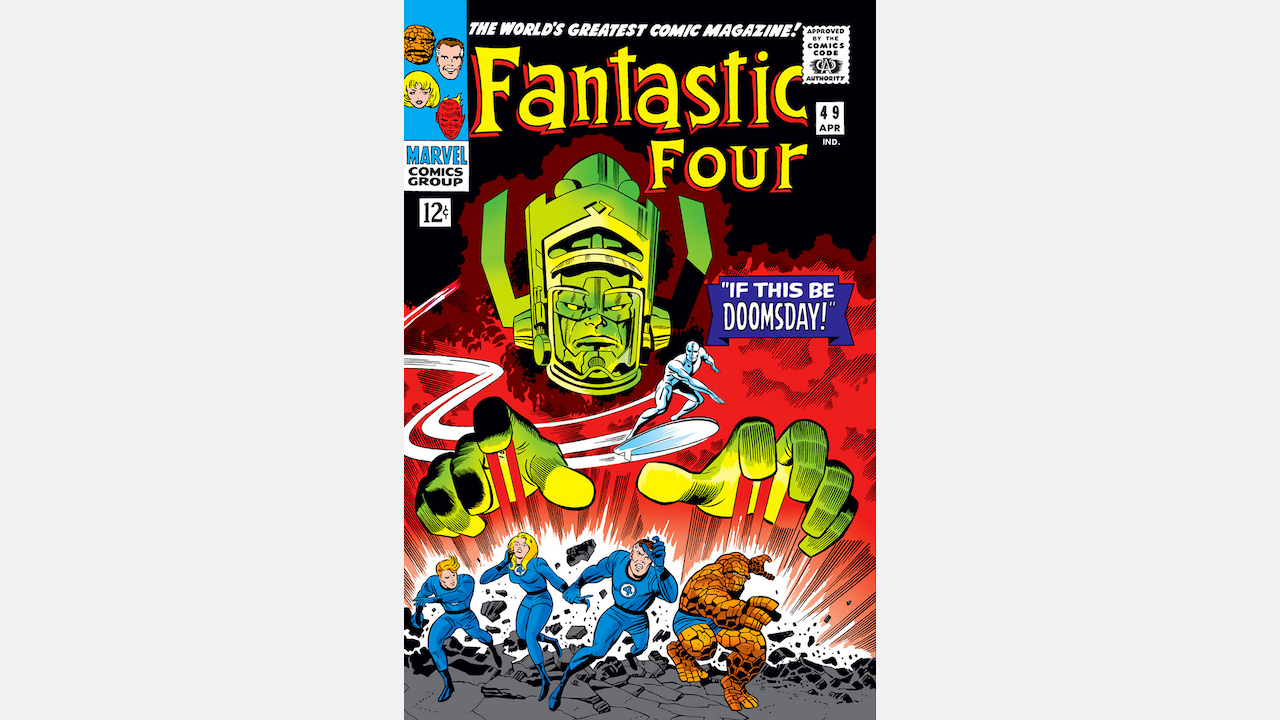
There's an questionable level about the origin of 'The Galactus Trilogy,' the FF's first showdown with Galactus, that says Stan Lee and Jackstones Kirby got the idea when Kirby , according to legend, asked Lee "What if the Grotesque Four met God?"
Whether that's true or not, the anecdote – and this story, the middle-point of Lee and Kirby's FF collaborationism – is a unmitigated microcosm of the insane game of 'yes, and...' that Lee and Kirby often embarked upon when crafting their stories (and which is for the most part responsible the discrepancies in how they're often credited).
Every kip down 'The Galactus Trilogy' adds another level of apocalyptic cosmic fantasy, driven by progressively bombastic plot devices and characters – from the comer of the enigmatic Silver Surfer to the looming mien of Uatu the Watcher, to Galactus himself, and of course, the tool of the FF's final resolute triumph, the Crowning Nullifier, Lee and Kirby simply don't slacken at one time this story starts.
In some ways, 'If This Exist Doomsday' set the blueprint for the modern verse form storyline, spreading its surprises and big ideas out over three issues (a lengthy tale at the time) with the highest wager possible. It's besides not just the pinnacle of Lee and Kirby's run artistically and creativeness, it's also the ane FF story any devotee absolutely a essential-read.
Buy: Amazon

I've been Newsarama's resident Wonder Comics expert and general comic account book historian since 2011. I've also been the along-site reporter at most Major funny conventions such as Comic-Hustle Global: San Diego, New York Comic Con, and C2E2. Outside of comic fourth estate, I am the creative person of many weird pictures, and the guitarist of many heavy riffs. (They/Them)

Source: https://www.gamesradar.com/the-greatest-fantastic-four-stories-of-all-time/
Posted by: swaderfrough.blogspot.com
0 Response to "The greatest Fantastic Four stories of all time - swaderfrough"
Post a Comment